Warren Bellamy Rescues Langdon
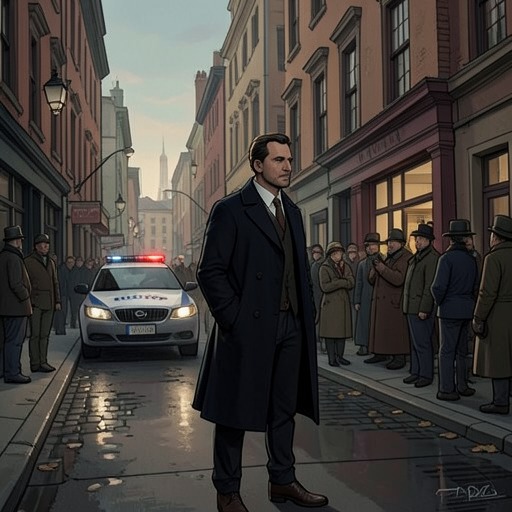
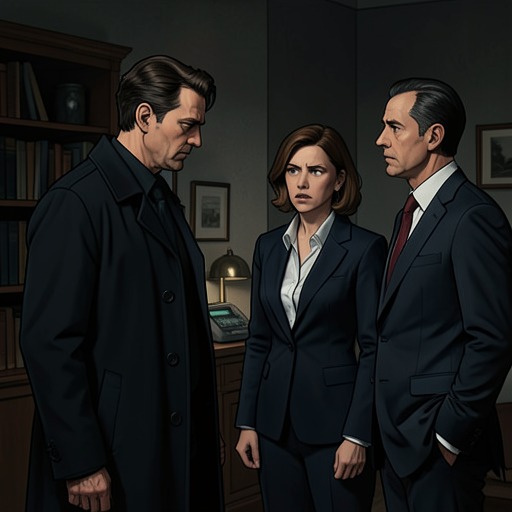
The Lost SymbolWarren Bellamy Rescues Langdon is the turning point in which Robert Langdon’s detention in the Capitol’s underground chamber gives way to a dangerous escape. Bellamy saves Langdon from Inoue Sato’s custody and protects the stone pyramid and its capstone, making the rescue a contest over both a man’s freedom and the objects at the center of the night’s mystery.
Intervention in the Chamber
Sato has decided to take Langdon to CIA headquarters, accusing him of lying to her and obstructing her investigation. While she directs Trent Anderson to pack the stone pyramid into Langdon’s bag, Anderson also places Langdon’s notes and the tiny package inside. The seizure threatens to put both Langdon and the objects beyond his control: Sato has photographed the pyramid’s engraving, and she expects CIA analysts to begin deciphering it. Langdon’s recognition that the small object is the pyramid’s capstone gives the packed artifacts a new importance, but he has no opportunity to explain before Sato takes charge.
A rush from the hallway breaks the confrontation open. The newcomer drives his shoulder into Anderson, sending him headfirst into the edge of a stone niche and onto the desk, where bones and artifacts scatter; an hourglass shatters and a lit candle falls. As Sato raises Anderson’s gun, the stranger strikes her shoulder with a femur, making her drop the weapon, then kicks it away. He turns to Langdon and orders him to take the pyramid and follow. The rescue is abrupt and physical: the chamber’s archaeological remains become instruments of interruption, and Sato’s attempted arrest collapses into disorder.
Langdon follows the stranger through the Capitol’s underground passages, carrying the heavy bag with the pyramid and capstone. Though he does not yet know the man’s identity or motive, he trusts him because he has intervened against Sato and acted to protect Peter Solomon’s pyramid. A glimpse of a Masonic ring bearing a double-headed phoenix and the number 33 offers the first clue to the stranger’s connection with Peter.
Bellamy’s Identity and the Escape Route
The stranger led Langdon up an unfamiliar staircase and through corridors that made the Capitol seem less like a single building than a city beneath the city. A ring on the man’s hand, marked with a double-headed phoenix and the number 33, had already suggested a bond with Peter Solomon; now his command of the maze and the key ring that opened its doors showed that he possessed both influence and intimate knowledge of the building. The route passed through a service hallway cluttered with supplies and garbage, then into the Capitol Visitor Center, where the escape almost ended in an encounter with a Capitol police officer.
The officer, Nuñez, was the same young guard who had screened Langdon earlier that night. Bellamy addressed him by name and ordered him to come along. At the visitor center’s southeast corner, Bellamy removed masking tape from heavy doors blocked with orange pylons and told Nuñez that Anderson might be injured in the subbasement. He then made the guard an accomplice: Nuñez was to lock the door behind them, replace the tape, keep the key, and tell no one—not even Anderson. Nuñez obeyed, despite his alarm, and Bellamy and Langdon passed through the concealed entrance.
Only after they were clear of the door did the rescuer identify himself as Warren Bellamy, the Architect of the Capitol and a dear friend of Peter. His name made the earlier clues cohere: the authority with which he had directed Nuñez, his access to the keys, and the Masonic ring that linked him to Peter. Langdon told Bellamy that Peter was in terrible trouble and referred to his hand; Bellamy’s grim reply made clear that the mutilation was only part of what had happened. The rescue had secured Langdon and the pyramid, but it had not resolved the danger surrounding Peter.
Bellamy took Langdon farther into the Capitol through a modern corridor under construction. When the lit passage ended abruptly and the way ahead disappeared into darkness, Bellamy went into an electrical room and found the switch for heavy orange extension cords running into the unlit stretch. A series of construction bulbs came on, revealing a long, narrow unfinished tunnel. Langdon compared its function to the Vatican’s passetto, though this passage was modern rather than ancient; its intermittent lights made its distant end seem almost to vanish. The unfinished route was a practical escape passage and a fitting image of the night’s uncertain way forward: Bellamy could lead Langdon through it, but neither knew where events would take them next.
Nuñez’s choice to help did not remain hidden for long. Back in the basement police headquarters, Sato and Anderson reviewed surveillance recordings while a CIA field team prepared to pursue Langdon and Bellamy. Nuñez admitted to Anderson that he had seen the pair leave through the visitor center and handed over Bellamy’s key, describing it as the key to the new tunnel under Independence Avenue. When Sato joined them, Nuñez tried to protect Anderson by pretending the key had merely been found on the floor. The surveillance team had already located the relevant footage, however, and Sato identified Nuñez’s role and Bellamy’s gift of the key. She took it from Anderson and dismissed both officers from the matter, exposing how quickly Bellamy’s escape had turned a private act of loyalty into a breach visible to the authorities.
The Escape’s Immediate Aftermath
Freedom from the Capitol did not give Langdon and Bellamy a secure refuge. At a desk in the Main Reading Room of the United States Library of Congress, Langdon grew increasingly worried because Katherine had promised to call once she was safely out of her laboratory and on her way to meet him, but she had not called. Bellamy, meanwhile, had contacted someone he believed could offer them sanctuary; that person did not answer either, so Bellamy left an urgent message asking for a return call to Langdon’s phone.
With both expected lifelines absent, Bellamy acknowledged that they were on their own for the moment and turned the conversation to a plan for the pyramid. Langdon’s attention narrowed to the stone object and sealed package before him, displacing even the grand reading-room setting. The escape had preserved his freedom and kept the artifacts with him, but its immediate result was not safety: it left the two men waiting for help, with the pyramid’s purpose still unresolved and Katherine’s whereabouts uncertain.
Significance and Limits of the Rescue
The escape changes the immediate balance of power without ending the crisis. Langdon is no longer in Sato’s custody, and the pyramid and capstone remain with him; yet Bellamy’s intervention brings the authorities’ attention onto the route they used, while Nuñez’s assistance is exposed and a CIA team prepares to pursue them. The rescue therefore exchanges one danger for another: freedom is recovered, but only as a precarious interval.
Its deeper significance lies in the way loyalty becomes action. Bellamy’s friendship with Peter is not merely disclosed through the Masonic ring and his introduction; it is enacted through his willingness to assault senior officers, enlist Nuñez, and guide Langdon through a concealed passage. The objects he protects remain inseparable from the effort to save Peter, while the tunnel carries the fugitives onward without promising a destination. By the time Bellamy and Langdon turn to planning around the pyramid, neither Katherine’s promised call nor Bellamy’s hoped-for refuge has arrived. The rescue preserves the possibility of continuing the search, but leaves its central human and interpretive problems unresolved.